
I Was a VP at 27, Wildly Successful And Crying Myself to Sleep
with Farhan Safi — Founder, Revo Realty
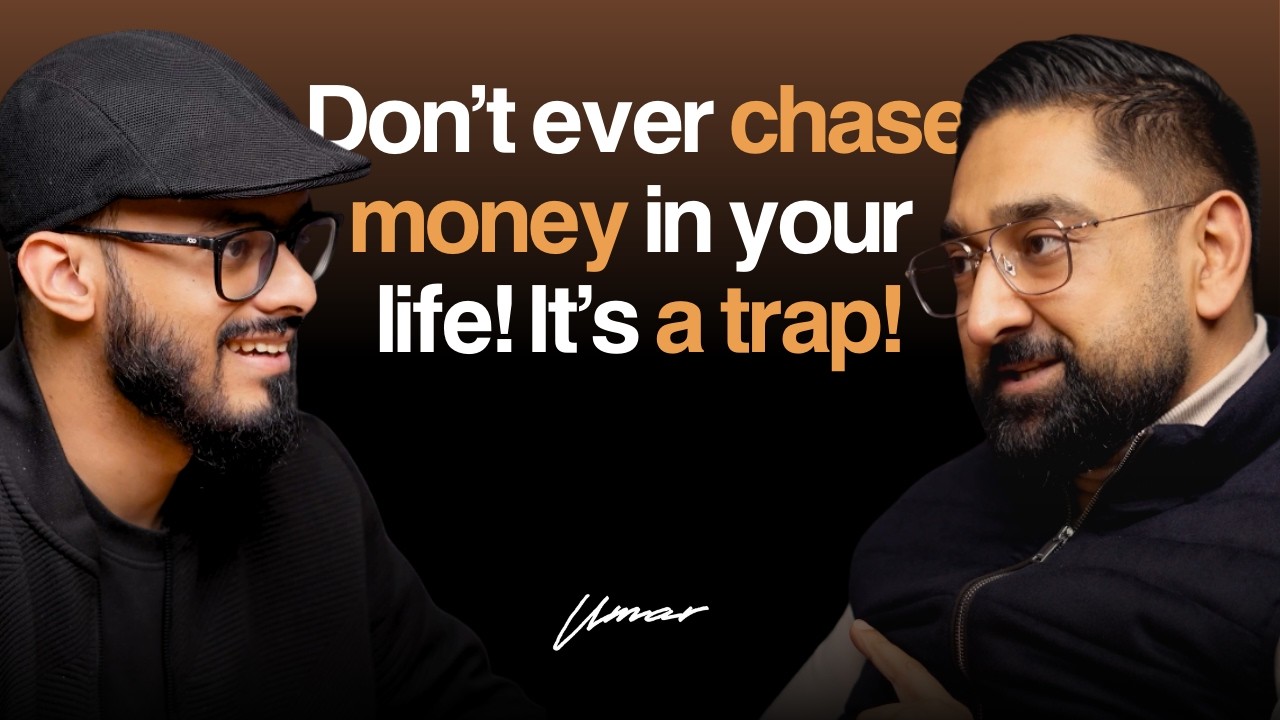
Farhan Safi opens up about the moment he walked away from corporate success, the brutal nine months that followed — card declined, eating once a day — and how the belief that "if I change enough lives, my life will change by default" rebuilt everything. This conversation goes far beyond real estate: purpose, mediocrity, raising kids in a hyper-digital world, and building a business rooted in values without compromising ambition.
Key takeaways
- 01
Chasing the next promotion will never make you happy.
- 02
Every entrepreneur needs an effort-vs-outcome mindset.
- 03
Integrate faith into business without compromising growth.
- 04
Your USP should be your values.
- 05
The truth about screen time, kids, and the modern matrix.
Show Notes
In this conversation
- 01
00:00 — Intro
- 02
01:12 — Welcome & introduction
- 03
02:22 — Who Farhan was before Revo Realty
- 04
04:00 — The Quran verse that changed his life
- 05
05:06 — Why he combined real estate with charity (the 1% model)
- 06
07:32 — The miracles that kept Revo alive
- 07
08:20 — The 9 hardest months: card declined, eating once a day
- 08
10:15 — How Muslim entrepreneurs handle stress differently
- 09
14:00 — Building a business on religious values
- 10
18:09 — Balancing dunya & deen (the biggest misconception)
- 11
22:07 — Escaping mediocrity & finding your unique purpose
- 12
23:40 — Managing stress & navigating tough seasons as a founder
- 13
27:17 — Prayer as subconscious programming for success
- 14
33:00 — How NOT to teach kids about religion
- 15
36:06 — Media, propaganda & raising children in 2026
- 16
44:00 — Why he'll never retire
- 17
46:28 — Building a legacy through your kids
- 18
50:17 — Final advice for aspiring entrepreneurs
The Summary
The conversation, distilled
Before Farhan Safi became the founder of Revo Realty, he was, by every conventional measure, living the dream. He rose to become the youngest vice president at his company, Square Yards, heading their Oman operations at twenty-five and managing a team of nearly forty-five people by twenty-eight. He traveled to seventeen countries in 2019 and nineteen or twenty the following year, collected more performance awards than he could carry, and earned the kind of money that made every external metric of success point firmly upward. And yet, he tells Umar, he would wake in the middle of the night and cry loudly into the dark. There was, he says, a deep hole — a relentless chasing of the next high, the next promotion, the next country — and no arrival point that ever brought peace.
The turning point came through the Quran. After a significant personal incident, Farhan decided to read it differently than the rote recitation he had grown up with in the Indian subcontinent — this time with translation, determined to understand what God was actually communicating. The verses of Surah At-Takathur stopped him cold: the passage describing the man who chases worldly gain until the day he reaches his grave felt, he says with visible emotion, as though it had been written specifically for him. He resolved to redirect his life entirely toward impact and giving back, initially considering starting a charity before realising that he was constitutionally unsuited to asking people for money. The solution was to combine what he already knew — six and a half years of real estate — with an embedded charitable model. Revo Realty was born with a commitment to donate up to one percent of every property's value to charity, regardless of whether the company was profitable or struggling to survive.
The early months were a form of suffering most people never see behind a founder's eventual success story. Farhan started alone, without savings or investors, and within weeks his debit card declined on forty-two dirhams of medicine for his sick children — on his wife's birthday. By October 2021, he had sent his family to live with his parents in India because he could not sustain them. From October through March of the following year, he ate one meal a day, walked to his office because he could not afford a taxi, and kept his entire ambition tethered to one monthly goal: arranging the 2,100 dirhams needed for rent. Calcium and vitamin D deficiencies returned, his joints ached through feverish nights, and there were moments, he says plainly, when an average person would have considered ending everything. What kept him moving was tawakkul — a trust in God anchored by Quranic verses he had deliberately memorised for exactly this kind of darkness. His particular comfort was the verse in which Moses, standing between the River Nile and Pharaoh's army, does not despair but declares: "With me is my Lord, and He will guide me."
Farhan is careful, however, to distinguish genuine tawakkul from passivity. One of the episode's most insistent threads is his conviction that Islam is a religion of effort first and surrender second — that even Moses was told to strike the water with his staff before God parted the sea, and that Omar ibn al-Khattab once rebuked men praying at midday when they should have been in the marketplace. The same principle shapes how Farhan thinks about leadership and learning: he employs two executive coaches at 4,500 dirhams per ninety-minute session, a therapist, a psychiatrist for his ADHD, a personal trainer, a boxing coach, and a nutritional strategist. He reads constantly. And the more he absorbs from the world's top leadership literature, he says, the more he recognises that its core wisdom — servant leadership, transparency, fairness, caring for people, holding a vision larger than oneself — is simply what Islam has always taught. Revo has sold 1.5 billion dirhams in property over two years, distributed roughly fifty million dirhams in commissions to its agents, and given more than three million dirhams to charity, with five million targeted for the current year alone.
Running beneath the business conversation is a deeper argument about prayer, identity, and how Muslims raise the next generation. Farhan reflects with striking candour on his own complicated relationship with salah — a therapist who keeps returning to it as the solution, and a childhood in which his mother's love-driven but fear-framed enforcement of prayer built, without intending to, a negative emotional association that still costs him. He believes the entire model of religious education in the Indian subcontinent needs to shift: away from rules, punishment, and hellfire, toward the actual texture of the Quran, which he argues spends far less than ten percent of its verses on restriction and far more on mercy, blessing, and the promise of reward. His counterintuitive confession — that he felt mentally happier eating one meal a day, with joints aching and no business on the horizon, because his connection with God was so vivid and unmediated — lands as perhaps the episode's most arresting moment, and its most honest argument against the idea that material success is the thing that will finally make us whole.
The conversation closes on the question of legacy, both corporate and familial. Farhan admits openly that his current work-life balance runs roughly ninety to ten in favour of the business, that he has postponed his flight to Canada to see his wife and children more times than he can count, and that this is his most pressing personal failure. But his long-term orientation is clear: he does not want to retire, cannot imagine it, and has told his fitness coach that he wants to be walking into his office at eighty and still inspiring people. He wants his children not to be millionaires but to make a bigger impact than he did — and he and his wife work deliberately toward that by keeping screens out of their hands and keeping conversations about empathy and generosity alive at home. His final advice to aspiring entrepreneurs is to identify their own drives rather than copy his, to invest relentlessly in self-improvement, and above all to understand that for a Muslim in business, religious values are not a liability to be hidden from the market — they are the USP, the foundation, and ultimately the channel through which God's provision flows.
Resources
Links & mentions
About the Guest
Farhan Safi
Founder, Revo Realty
Farhan Safi was the youngest Vice President at his company at 27 — leading teams across countries and travelling the world — before walking away from corporate success. He is the founder of Revo Realty, the Dubai real estate company that gives up to 1% of every property value to charity.
Keep Listening
More episodes


Sponsor the Podcast
Reach thoughtful founders, builders and ambitious young professionals.
North House listeners are people building things that matter. If your brand belongs in that conversation, let's talk.
Sponsor the podcast